
Misfits and Christmas Letters: A How-To Guide
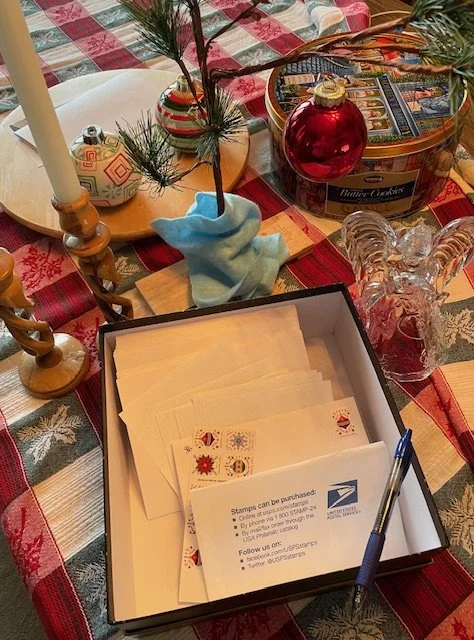
Sometimes you sit down to write and you have nothing to say. Other times you have so much on your mind that the words get jammed from your mind to your pen/keyboard. It happens whether you’re writing books, blogs, or Christmas letters.
Christmas letters? Yes, those dreaded time-honored traditions where people brag about their family accomplishments in 9-point font and fill up both sides of the page. Those. (When you receive one you have to read it in your best country club/yacht accent.) I’ve been sending one out for at least a decade. (Permission is hereby granted for you to read mine in a silly accent.) My letters are maybe a page at most, full of pictures and self-deprecating humor, and they have a font type you can usually read without your glasses. I think those are the qualities that make for good holiday reading. I could be wrong.
Anyway, you sit down to review the last 12 months and realize you don’t know what happened this year. Did anything even happen? How did we get here? Was it just a bunch of non-essential days strung together and now the year is up?
Well, don’t panic. Start with what you know. Write a sentence, any sentence, or even a fragment of one; just put something down. Then jot down some notes. No need for real sentences, we’re all friends here. It’s kind of a brain dump at this point.
Next: Feel free to walk away, and I mean really do something else for a little bit. Get your mind off what you’re writing because that’s when new ideas emerge. Come back fresh and start shaping what you’ve written, i.e., go through each note and add detail, finishing your thoughts on each point. This step is all about zeroing in on a specific story or two that illustrate what you’re trying to say. You should see paragraphs starting to take shape, and once they do, you can re-read them from the beginning and re-order the paragraphs if needed. Don’t be afraid. You’ve got something written so now you’re just moving things around, shaking things up.
Keep reading from start to finish. In Writer School, you learn the importance of reading everything out loud. Wherever you stumble in reading is where your readers will also stumble. Smooth out those sections by changing a word here or there. Write transitions from one paragraph to another if needed. If you can’t think of any connections between one paragraph and the next, try moving the paragraphs until you can see where connections appear.
At this point, you’re striving to have the better part of a page that makes sense. If something doesn’t fit—now, this is important—cut it. Yes, cut it. Notice I did not say delete it. Save it somewhere else, to an outtakes document where you can use it later for another project. Uncannily, these misfit sections usually do fit in, perfectly, in another piece of writing. Our minds are amazing that way.
Put in a memorable ending before you’re done, something that repeats a sentiment you used earlier on in the letter if you can, bringing everyone around full circle. They’ll appreciate it. And voilà, you have a Christmas letter, nearly ready to send.
When you feel pretty confident in what you’ve got, spell check it and look for grammar mistakes. I had a boss years ago who was a great editor. Mr. French was the real-life inspiration behind my character Mr. Watters in my first book, Upside Down Kingdom, so much so that I dedicated the book to him. Mr. French used to hold an index card under each line of writing to let his eyes focus on only one line at a time. This trick makes it much easier to spot mistakes.
All of this can be harder (or easier) said than done. But don’t worry. You’re a lot more interesting than you realize. I mean, you just went from a blank page to a snapshot of your life this year, in words. That’s pretty remarkable. Now, about that accent…